

Support At Home
The Support at Home Program aims to provide improved access to home care
services and equipment, helping older Australians remain healthy, active, and
socially connected while living independently at home.

About the Support at Home Program
- 8 new classification levels with associated funding
- Increased funding for people with complex care needs
- Clearer assessment and reassessment pathways as needs change
- Dedicated funding for assistive technology and home modifications
- Additional funding to support individuals in the last 3 months of life
What Has Changed?
As of 1 November 2025, Australia’s aged care system transitioned to the Support at Home model.
This replaces:
- Home Care Packages (HCP) Program
- Short-Term Restorative Care (STRC) Program
Funding Comparison
Home Care Packages (Previous)
- 4 Levels of Support
- $10,986 – $63,758 per year
Support at Home (New)
- 8 Levels of Support
- $10,731 – $78,106 per year
Client Types
From November 2025, everyone receiving or applying for home support will be part of the Support at Home program.
Grandfathered Clients
If approved on or before 12 September 2024, your contributions are protected
under the “no worse off” rule.
You will pay the same or less than before.
Transitioned Clients
New Clients
Additional Short-Term Funding Pathways
Assistive Technology & Home Modifications
Funding for equipment and home modifications to support safe, independent living. This does not come out of your regular budget.
Restorative Care Pathway
Short-term intensive support (e.g. allied health or nursing) to help restore independence and prevent decline.
End-of-Life Pathway
Additional services for individuals with 3 months or less to live, supporting comfort and dignity at home.
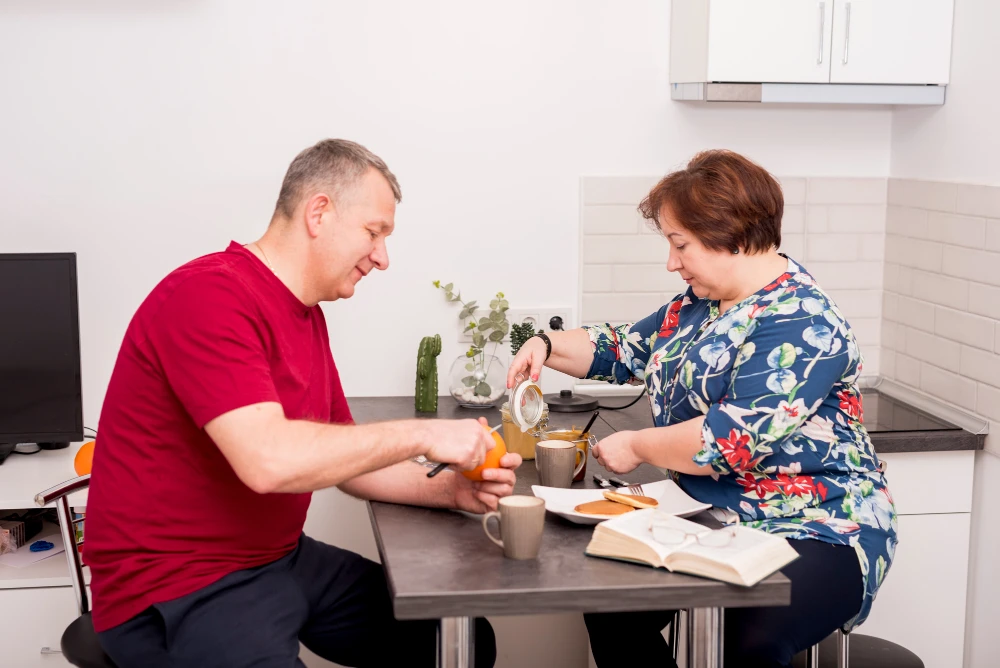
What This Means for You
- More choice & control:– Flexible budgets tailored to your needs.
- Improved independence:- Better access to equipment and home modifications.
- Stronger support:- Clear pathways during recovery or end-of-life care.
- Financial clarity:- Transparent pricing and contribution structures
Frequently Asked Questions
What is Support at Home?
Do I need to do anything to transition?
Will my care change?
No. Your current services will continue, with any changes discussed with you.
Who decides my services?
The type of services available are set by the Government.You will work with your Care Partner to choose services that meet your goals.
What is a Care Partner?
Fees and Contributions
Why do I need to pay a co-contribution if I joined after 12 September 2024?
From 12 September 2024, anyone newly approved for care packages is assessed
under the Support at Home framework. This includes income-based contributions
where applicable, as determined by Services Australia.
This system has been introduced to ensure a fair and consistent approach for all
new participants.
If I started before 12 September 2024, will my fees increase?
How is my co-contribution calculated?
Do I still need to pay income-tested care fees?
Yes. If Services Australia has previously determined that you are required to
contribute, this will continue under the new program.
Can I adjust my services to lower my contribution?
Why might the hourly rate seem higher?
Budgets and Agreements
Will I receive a new budget?
Yes. A new budget will be provided outlining your total funding, including any
contributions. Funding will now be distributed quarterly rather than annually.
What happens if I don’t use all my quarterly funds?
What about unused funds from my current Home Care Package?
Will there be a new service agreement?
Yes. You will receive an updated agreement that clearly details:
Your allocated budget
- Services provided
- Your rights and
- responsibilities
Services and Care Planning
Can my services increase if my needs change?
Yes. Your Care Partner will regularly review your situation.
If your needs change, you can request additional services or a reassessment.
Why are clinical services important?
What is meant by “wellness and reablement”?
This approach focuses on maintaining and improving your independence.
It may involve:
- Short-term support to regain abilities
- Therapy programs
- Assistive equipment to support daily living
Can I still access funding for equipment or home modifications?
Additional Information
Will my Care Coordinator change?
Will I lose any of my current services?
How often will my care be reviewed?
What is the case management fee?
Why Choose Khalia Care
At Khalia Care, our values guide every interaction, every service, and every decision we make in supporting the people and families we work with.
Respect
We treat every individual with dignity, understanding, and cultural sensitivity, recognising unique strengths and experiences.
Compassion
We care deeply about the wellbeing of the people we support, approaching every task with empathy, patience, and kindness.
Flexibility
Everyone’s needs are different. Our services are adaptable to suit each person’s lifestyle, preferences, and goals.
Quality
We are committed to delivering high-quality care through skilled staff, continuous improvement, and services that promote safety, independence, and wellbeing.
Our Support at Home Services
Daily Living & Independence
- Personal Care
- Cleaning & Domestic Assistance
- Meal Preparation & Shopping
- Transport
Social & Community Support
- Social Support & Companionship
- Community Engagement
- Support to access activities
Clinical & Specialist Care
- In-Home Nursing Care
- Post-Hospital Support
- In-Home Dementia Care
- Palliative Care at Home
Care Where You Live
Everyone’s needs are different but the comfort of home is universal.
Khalia Care provides flexible, personalised support so you or your loved one can remain safely at home while receiving the care you need.
Speak With Someone Who Understands
Contact Khalia Care today for a FREE consultation and personalised care plan.